
Harri: A Creator of Timeless Community in Montreal
https://www.youtube.com/watch?v=NDar5twZD8w
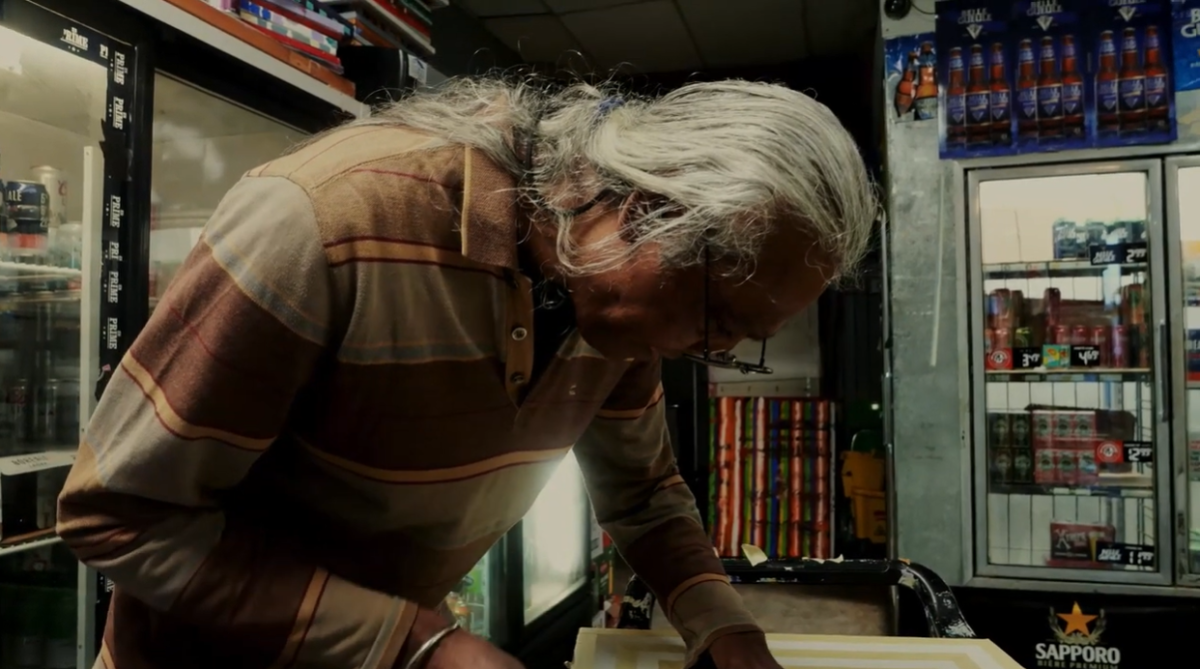
On December 12, McGill student Natalie Vaida came to the CJSF studio to discuss her first documentary, Harri. The film follows the life of a man in Montreal who owns a corner store in the Plateau neighbourhood. Vaida describes this store that has been around since the 1980s as a “pillar of the community” where everyone comes not only to buy their snacks, but to chat with the owner. In between customers, Harri creates mesmerizing paintings inspired by his qigong practice, which is a type of energy movement similar to tai chi. Vaida originally intended to make the documentary about his art, but as it went on, qigong became an inevitable focus of it because it influences all parts of his life.
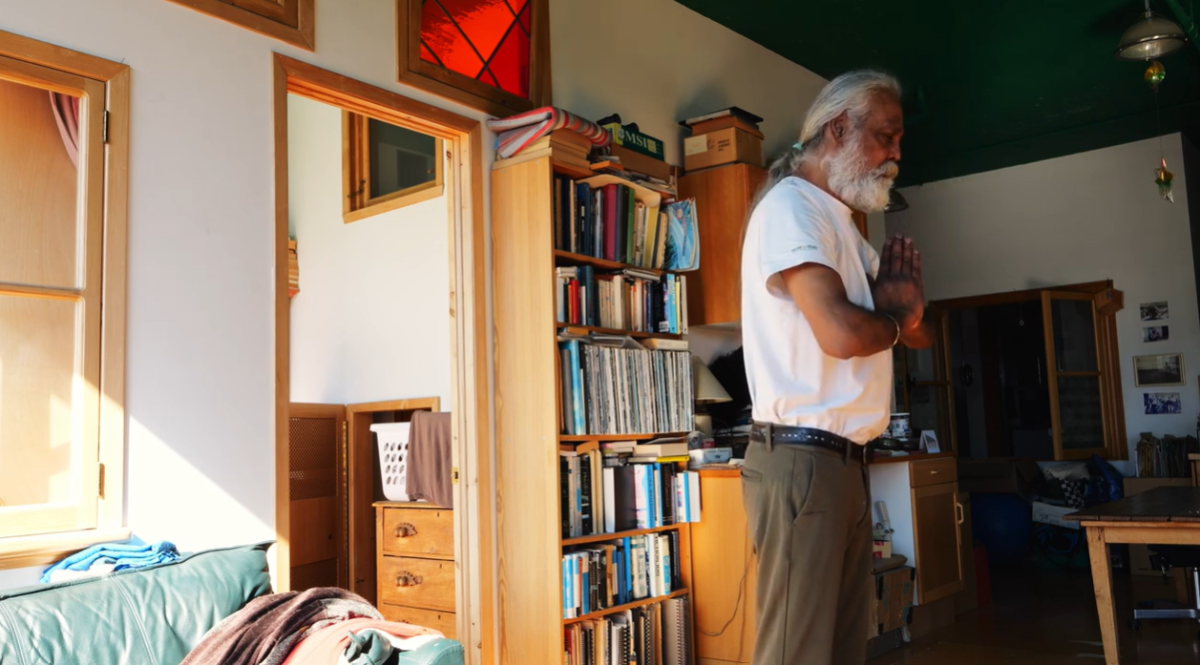
The documentary can be found on the filmmaker’s YouTube channel called Natalie Vaida. In just 24 minutes, Vaida deeply integrates the viewer into the dynamics of Harri’s vibrant life. By opening with a peaceful shot of Harri teaching qigong, Vaida sets the foundation for how each action he does later on relates back to his practice. In contrast to the initial silent sequence, the bustling conversations in his store demonstrate Harri’s seemingly effortless creation of a place where people can be themselves even among strangers.
Harri’s impact from his corner store offers a rebuttal to the common notion that community is hard to come by and art is something that everybody is too busy for. His story reminds us to take control and act upon the things we find important, and do so with ease and openness.
In these interview highlights, Vaida vividly describes Harri’s impact on his community along with her personal experience documenting it and participating in his qigong practice.
What is your documentary about?
[Harri] is the Dep owner [Dep is like a cornerstore in Montreal] near where I lived, and he’s also a painter. He paints in his store because he has nowhere else to paint, so I met him just buying stuff from his place and we talked about art and his paintings and I told him I was interested in film. He was like, “oh, well make a film about me” and so I actually took him up on it.
He’s kind of like a neighbourhood legend. His store has been there since the 80s. Everyone kind of knows him. He’s super sociable. Everyone hangs out in his store. The story started there.
What kind of paintings does he do?
He mostly does geometric paintings. Lots of linework in different ways. He does it in a way for you to kind of pull focus when you’re looking at it. A lot of them are quite similar, he just changes up the directions the lines are going or the shapes he’s doing and the colours.
Did he explain his process?
For him, it’s less about explaining and more about storytelling. If I ask him why he does these shapes, he’ll kind of go on a tangent about some time in his life and what led him to this point. It very much is influenced by his qigong practice, which is kind of like a mindful movement practice similar to tai chi. It’s his way of pulling focus in his life and his method of meditation and moving his body. He really wants to “cultivate qi,” is how he explains it.
Did you go with him to do qigong?
The first thing I ever filmed was a qi gong class that he was hosting. He is a qigong master, so he teaches a class. When I first pitched the idea to him, he was like, “oh, well, come to my class, let’s try it out.” His store was closed for a couple months at the time for some sort of lease issue so I couldn’t film in the store, so I was like, “okay” and [the practice] was in his friend’s apartment. It was like ten people in the room and I just set a camera on a tripod and filmed him for 40 minutes straight doing qigong. It was very interesting because in the room it was very silent. When most people first see that shot, they think it’s just him doing it and they don’t realize there’s ten people behind the camera doing it because it is so silent; people are so focused.
I was planning on just holding the camera, but he made me do it with him. He was like, “no, you have to,” and so I was there doing it and it was quite beautiful and I kept on going after that.

What was the group like?
Mostly his friends. Lots of characters that hang out in his store. Mostly, like, over 60 [years old]. People have explained [qigong] to me as something that has quite a heavy energy, so it is something that maybe is better to do later in life because doing practices with lighter energy is better to start out with, especially when you’re young, so I think that’s why the draw to that is with older people. Also the movements are a lot slower, so it’s kind of easier on the body in a way.
What was the focus of the documentary?
It really changed from my original idea until after because I think Harri, having a creative mind, had his own twist on things and I really couldn’t avoid it and I kind of love that.
At first I just wanted to make it about his art and his process, and then it really became about qigong because that affects every part of his life and he can’t avoid it.
Then, after filming a lot (I filmed for over two months. I went every day I possibly could film for hours. That was probably so annoying), I kind of realized that [the documentary] was about him building a community and his store being a big pillar of the community. The neighbourhood is changing a lot over the years, but his store is something that’s almost stuck in time and a constant and something I think is very comforting to people there.
And so, you see people passing by in the background a lot and you realize his role in life is to be that person.
What was his reaction when you agreed to make the documentary about him?
We sat in a cafe and I pitched it. He’s so easy going, laid back, and really open to everything, so I came with the camera and started filming everything. He didn’t ask any questions. He didn’t care about what direction I was going. He was just living his life and I was just filming everything.
Did anything unexpected come up when you were making it on the technical side?
Definitely. I had no experience. I very much think that doing it was the best way to learn. I had taken a few workshops on how to use a camera and edit and stuff, but, even while I was there, a lot of his friends in the store would help me. Like, one of his friends works as a videographer, so, he saw my camera had the craziest settings. He fixed it for me and I didn’t touch it after that.
How has being a part of the critical media club at McGill inspired you?
We really want to foster a community of practice. So, no matter what, everyone there is so non-judgemental and always has really constructive feedback to give and it fosters a place to just make stuff no matter what, even if you’re nervous, even if you’re not qualified, whatever, which I think is what gave me the power to do this, because I only filmed this documentary as an independent project, but I used equipment from the club and I got advice from people from their own experiences. It’s all other students.
Was there any way that you consciously approached your relationship with Harri so he would feel comfortable being documented?
I didn’t want to go in just asking invasive questions right away. I mostly came in the store and just hung out because everyone hangs out there and sits around and talks, so I would do that too. I wanted to become friends with him more indirectly. Obviously he knew I was doing this, but I wanted him to feel like I actually had a true interest in him and I wasn’t just using him to make some art out of it.
That even goes beyond the film. Even now I still visit him when I can. I still went to the qigong classes he would host even if I wasn’t filming that day. I really wanted him to know that I cared about his well being and who he is as a person.
Do you have any advice for anyone who wants to make a documentary?
Don’t worry about the equipment. Don’t be nervous, just start filming. I have a friend who didn’t know what documentary he wanted to make so he went out with a camera and started walking and he found some fishermen on the Saint Laurent river and started filming him. He became friends with them. So, really just go out with a camera, start walking, get out there, and don’t be afraid to ask people to make a documentary about them.
This interview has been edited and condensed for clarity.